Research Article | | Peer-Reviewed

Economic Viability of Clarias gariepinus Fingerlings Production in Ibadan, Oyo State, Nigeria

Received: 14 May 2026     Accepted: 25 May 2026     Published: 2 June 2026
Views:       Downloads:
Abstract

Profitable fish farming, as one of the fastest growing sectors of food production, requires the knowledge of resource use efficiency, especially by farmers who run hatchery. This study therefore examined the economic viability of Clarias gariepinus fingerlings production in Ibadan, Oyo State, Nigeria. The study used primary data sourced from 31 purposively selected hatchery farmers. Data were analysed using descriptive statistics, profitability ratios, 3-points likert scale, and Pearson chi-square correlation test. Findings show that Clarias spp. was mostly cultured alone (38.7%) for over 6 months (77.4%), broodstocks were mainly sourced from private farms (61.3%), and fingerlings were harvested more than thrice per year (71.0%). The average fish seed produced per cycle is 15,451.6. The costs and returns per cycle showed a higher total variable cost (₦237,919.90) than the total fixed cost (₦104,705) incurred, of which fish feed had the highest proportion (22.6%). The profitability results show a positive benefit-cost ratio (1.54), expense structure ratio (0.44), and return on investment (0.54), showing that production of catfish fingerlings is economically viable. Furthermore, there exist significant relationships between cost of fish feed (x2=16.336, p<0.01), poor fish breed (x2=9.772, p<0.05), obsolete technologies (x2=17.718, p<0.01), and transportation cost (x2=16.118, p<0.01) with production capacity of catfish fingerlings. Thus, challenges faced by fingerling-producing farmers significantly influence the production capacity of catfish fingerlings in Ibadan. Therefore, measures should be put in place to ensure affordable loans, prompt extension services, availability of fish feed, and supply of quality broodstock to hatchery fish farmers in Ibadan, Oyo state, Nigeria.

Published in American Journal of Agriculture and Forestry (Volume 14, Issue 3)
DOI 10.11648/j.ajaf.20261403.12
Page(s) 149-159
Creative Commons

This is an Open Access article, distributed under the terms of the Creative Commons Attribution 4.0 International License (http://creativecommons.org/licenses/by/4.0/), which permits unrestricted use, distribution and reproduction in any medium or format, provided the original work is properly cited.

Copyright

Copyright © The Author(s), 2026. Published by Science Publishing Group

Keywords

Fingerlings, Broodstock, Economic Viability, Artificial Propagation, Hatchery

1. Introduction
1.1. Background to the Study
Globally, in the agricultural sector, aquaculture has been acknowledged as a significant subsector in the combat against malnutrition, food safety, and poverty eradication, specifically in the Low-Income Food Deficit Countries (LIFDCs) . Aquaculture has been verified to supply sufficient required digestible and cheap animal protein sources, and it provides other essential elements . As a result of these benefits, fish farming has been among the global fastest developing sector of food production . For several years, nations globally have relied primarily on fish captured from the wild to meet the fish requirements needed by the body. However, in the late 1980s, capture fisheries reached a comparatively inert point . Ever since then, aquaculture has been a way to close the gap between the supply and demand of fish for human consumption.
Nigeria is fortunate with a huge area of water bodies comprising fresh and marine waters of about 900 kilometres and above 14 million hectares (ha), respectively. About 75% of fresh waters such as lakes, rivers, et cetera, is appropriate for fish farming . As a result of this, Nigeria has turned out to be the world’s leading African catfish producer and the second largest fish producer in Africa, next to Egypt . Report from the National Bureau of Statistics (NBS) stated in 2021 that the fisheries sector contributed about 3.24% to Nigeria’s Gross Domestic Product (GDP) in 2021 quarter 1 (Q1). Fish and fisheries items are regarded as the most significant aspect of nutrition and food security for many of underprivileged populations in LIFDCs . Nevertheless, some occupants of LIFDCs rely on fish as their source of major micronutrients, vital fatty acids and mineral sources, and also as their source of livelihoods .
Moreover, fish has been associated to reduced cancer risk in the bowel as well as insulin resistance in the skeletal muscles . Fish is significant as it accounts for 40% of the nation’s protein intake, with fish consumption per capita being 13.3kg/person/year, which is less than the recommended global average of 20.5kg/person/year . More so, the nation’s fish production is incomparable with the rapid growth of the population of 218,541,212, with a forecast of more than 260 million by 2030 . Hence, there exists a boundless deficit of production of fish in Nigeria, and the incapability of the fish industry to meet the high demand has been pinned down to the thriving human inhabitants.
Knowledge regarding resource use efficiency is essential to farmers in determining catfish productivity . Moreover, profitability analysis can direct investors as well as entice stakeholders in committing available funds into the production of catfish as a result of a high profitability rate, which has been reflected in previous studies . Studies have been carried out on the viability of fish farmers who raised catfish juveniles to table size, generation of revenue and the alleviation of poverty . However, there persists a literature gap in the economic analysis of fish farmers who run a hatchery and raise them until they reach the fingerling stage. Therefore, this study aims to ascertain the economic viability of the production of catfish fingerlings in selected catfish farms in Ibadan, Oyo State, Nigeria.
1.2. Objectives of the Study
The main objective of this study is to ascertain the economic viability of the production of catfish fingerlings in selected catfish farms in Ibadan, Oyo State, Nigeria. The specific objectives are to:
1) Analyse the production capacity of selected catfish farms.
2) Estimate the costs and returns of catfish fingerlings production.
3) Identify the challenges encountered by fish farmers during catfish fingerlings production.
1.3. Hypothesis of the Study
There is no significant relationship between the challenges faced by fingerling-producing farmers and the production capacity of catfish fingerlings.
2. Literature Review
2.1. Conceptual Review
2.1.1. Description of Catfish
In Nigeria, there are about twenty-four species of Clarias, and Clarias gariepinus has been differentiated as the dominant cultured fish, as it is preferred to Clarias lazera, which was first reared widely by a Dutch scientist in the 1970s at Central African Republic . Some of the Clarias spp. lack the growth prospect of the Clarias gariepinus. Clarias spp. generally originate in slow-moving rivers or swampy areas and breed during the rainy season, and have the ability to move on terrestrial from one body of water to another. The ability made Clarias gariepinus very resilient and proven to be an adapted fish to Africans . The financial significance of catfish species is improved by their toughness and flexibility to hostile environmental situations, and disease resistance in culture.
Clarias gariepinus has the ability to breed under confinement, has rapid growth level and ability to flourish well with economical feed, can endure stockings of dense capacity and has high end-user ranking . In Nigeria, many fish farmers concentrate on catfish production due to its market worth of around three times that of tilapia . Among other fish species, catfish has been discovered to be the fastest developing fish in captivity that can succeed in an extensive range of circumstances. Aside from Clarias gariepinus, other desired cultured fish species in Nigeria include Heterobranchus spp., Heteroclarias and Tilapia spp. (Oreochromis niloticus, Tilapia guinensis, and Sarotherodon galilaeus, respectively) .
2.1.2. Description of Hatchery
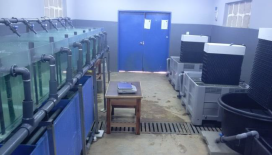
A hatchery is a place where artificial breeding is carried out . Regarding fish, eggs stripped from the female fish are hatched under synthetic environments and nurtured via the early stages of life (that is, from eggs to larvae, to fries, to fingerlings, to juveniles) before moving them to natural waters or constructed ponds. Figure 1 shows the example of a hatchery set up courtesy International Institute of Tropical Agriculture (IITA).
Source:

Download: Download full-size image

Figure 1. Hatchery setup.
2.1.3. Factors for a Successful Hatchery
The following factors are necessary for a successful hatchery .
1) Availability of suitable quality water.
2) Good quality broodstock.
3) Appropriate calculation and administration of proper dosage of hormones.
4) Accurate collection of testes and preparation of sperm.
5) Proper determination of ovulation time in female fish.
6) Appropriate stripping of eggs from female fish and fertilization techniques.
7) Good regular and infrequent management practices.
8) Fish feed quality and a well-timed feeding period.
9) Simple keeping of record.
10) Bio-security
2.1.4. Ways of Identifying Adult or Mature Male and Female Catfish
Male and female fish of at least one year old that weigh more than 1kg should be selected for breeding. Other ways of identifying male and female fish are as follows :
Size: In some species, male fish are smaller and narrower or thinner than females. The female fish could develop to be 1 inch bigger than the males.
Head size: Male fish's head is bigger and broader than the female fish's head.
Body width: Around the belly area, female fish are broader and plumper than the male fish; the plumper space is required to convey lots of eggs.
Dorsal fin: Male fish have brighter and longer dorsal fins than female fish.
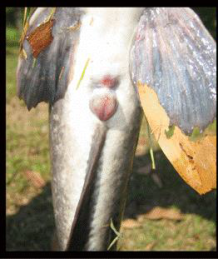
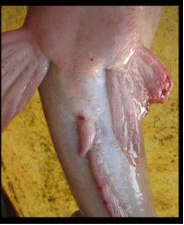
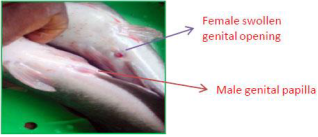
Openings (Genital): Both male and female fish have 2 apertures at the lower tummy, one for the genitals and the other for the anus, as shown in Figures 2 and 3. Prior to spawning (the production of eggs), the female fish's genital opening will be swollen and reddish in colour (Figure 4).
Source:

Download: Download full-size image

Figure 2. Female fish flat genital area and rounded opening.
Source:

Download: Download full-size image

Figure 3. Male fish raised genital area with nipple shape.
Source:

Download: Download full-size image

Figure 4. Swollen genital opening of the female fish and genital papilla of the male fish.
2.1.5. Broodstock Selection for Artificial Reproduction or Propagation
As a universal general principle, one male catfish broodstock with fully-grown testes will inseminate eggs from an average of 8 to 10 female breeders, so the usage of 4 to 5 male broodstocks with sufficiently full-grown testes will inseminate eggs from 32 to 50 female breeders . The male-to-female ratio is influenced by the development and size of the testes, sperm quality and egg quantity, which is produced by individual female catfish.
2.2. Theoretical Review
The underlying theories for this study are the logistic growth model and the risk-bearing theory.
2.2.1. Logistic Growth Model
The logistic growth model was developed by P. F. Verhulst in 1838 to describe the pattern of population growth as it approaches an environmental limit known as the carrying capacity. The model proposed that an increase in population depends on the existing population size and resource availability, which results in self-limiting, rather than unlimited growth. This theory underlies the analysis of wildlife management, fisheries regulations, and microbial growth. According to Verhulst, capture density depends on factors such as competition, predation, and disease, which intensify with population size . In relation to fish production, at the initial stage, when there are few fish, growth is rapid because of resource availability and little competition. But as the population increases, resources become limited, growth slows down and eventually stabilizes at a maximum level (carrying capacity) beyond which growth rate drops, fishes become smaller, and mortality may set in. Based on the proposition of this theory, to improve production efficiency, fish farmers should avoid overstocking, harvest around mid-population level, plan feeding adjustment as population approaches carrying capacity, maintain water quality and prevent stress that reduces productivity.
2.2.2. Risk-bearing Theory
Risk-bearing theory by F. B. Hawley in 1893 posits that profit is the reward of an entrepreneur for bearing non-insurable risks and uncertainties in production. The theory argues that higher risks generally yield higher potential profits, with risk-taking acting as a primary incentive for innovation . The risk-bearing model in fish production is an economic concept that explains how fish farmers decide in the face of uncertainty, especially in relation to yield, prices, or costs. Fish farming operates under several uncertainties, such as disease outbreaks, water quality, weather changes, price instability, et cetera. According to this model, the willingness of fish farmers to produce is driven by their attitude towards risk and readiness to make decisions to balance expected profit and risk level. The theory suggests maximization of expected utility instead of profit maximization.
2.3. Empirical Review
The productivity of catfish production in Osun State, Nigeria was analysed . Primary data were elicited from 131 catfish farmers using a multistage sampling procedure, and were analysed using descriptive statistics, profitability analysis, and multiple regression analysis of Cobb-Douglas function. The findings indicated that the average age of the farmers was 49 years and that a majority (89.3%) had tertiary education. The respective average gross margin, average profit, and benefit cost ratio were ₦788.823.54, ₦413,012.27 and 1.06, and a high Total Factor Productivity (11.32) was obtained. Regression results showed that the quantity of feed used, the cost of hired labour and the years of farming experience positively influenced catfish yield. Meanwhile, the size of ponds, stocking density, type of water used, cost of fingerlings, and cost of transportation negatively influenced catfish yield. Additionally, challenges encountered by the farmers include expensive feed, inadequate access to credit facilities, and unstructured market for catfish.
A profitability analysis of smallholder aquaculture farms in Lagos State, Nigeria was carried out . It involved 80 catfish farmers who were selected randomly and interviewed. The data generated were analysed using enterprise budgeting, investment and sensitivity analysis. Results portrayed that the farmers were 40 years on average and a larger proportion had a formal education. The mean production period was 5 months, and the average prices per fingerlings and matured catfish (kg) were ₦20 and ₦734. Based on the budgetary analysis, average gross income, average total cost, and average profit were ₦11,882,813, ₦11,181,655 and ₦701,158, respectively. Also, the Benefit Cost Ratio, Net Present Value, and Internal Rate of Return were 1.44, ₦18,454,354 and 54%, respectively, showing that smallholder aquaculture farms in Lagos State operate profitably.
The economics of catfish hatchery farmers and their household poverty mitigation contribution in Osun and Oyo States, Nigeria were studied . Primary data were sourced from 423 hatchery farmers from the two states, and were analysed using descriptive statistics, Foster-Greer-Thorberke index, and the Tobit model. Findings showed that most (63.1%) of the farmers were literate, with an average age of 46 years. The mean hatchery units were 7, and about 52.0% used wooden troughs and concrete tanks. The average production capacity of production was 8,104; more than one-third of the farmers reported between 1.1-2.0kg mean weight of male broodstock (48.5%) and of female broodstock (45.6%). Findings showed further that male broodstock and female broodstock per kg cost ₦4,619.36 and ₦3,945.34, respectively. Flow-through was the mainly utilized production system (84.4%). Profitability analysis showed an average total revenue of ₦226,912, gross margin of ₦180.767.51, Benefit-cost ratio of 1.53 and Return on Investment of 0.53. About 56.9% were moderately poor, and farmers’ sex, level of education, number of hatchery units, fish seed quality, as well as being a member of cooperative societies, alleviate poverty, while marital status, household size, years of fish farming experience, and number of labour employed worsen poverty among the farmers.
Studying the profitability of fish production among members of cooperative societies in Okrika Local Government Area of Rivers State, Nigeria , a descriptive survey design and a structured questionnaire were used to elicit necessary data. Descriptive statistics and scale analysis were employed to analyse the data obtained. The findings indicated a weak correlation (r=0.219) between years of cooperative membership and years of fish farming activities at p<0.01.
In order to explore the economics of catfish production in Osun State, Nigeria, a multistage sampling procedure was used to source primary data from 80 catfish farmers . The data sourced were analysed using descriptive statistics, farm budgeting approaches, and the OLS regression model. On average, the farmers were 40 years old, with about 6 years of experience and 4 persons per household. Most financed the fish farming activities with personal savings (4.50), and money lenders (1.45) were their least source of finance. Results showed further that disease infestation and improper preventive measures (4.20) mostly hindered catfish production, while a lack of fingerling supply (2.48) was the least hindrance. The respective average total cost, gross margin, and net return of ₦1,677,699.00, ₦905,668, and ₦206,341 were obtained. Results also showed a benefit-cost ratio of 1.1229 which is greater than one. Catfish profitability was found to be influenced by pond construction cost, startup capital, labour and feed cost, and fish stock.
In analysing the profitability and the challenges limiting the profitability of catfish production in Southwest Nigeria, a 2-stage random sampling procedure was used to select 400 catfish farmers in four randomly selected states in Southwest Nigeria . Structured questionnaire was designed to collect data. Descriptive statistics, Gross margin, Benefit Cost Ratio (BCR) and Expense Structure Ratio (ESR) were used to analyse data. The results show that on the average, size of catfish at harvest was 1.02Kg, production period was 4.37 months, market price was ₦645.45/kg and the breakeven price was ₦474.43/kg. Also, the total revenue was ₦1,269,961.60, total cost was ₦933,467.98, profit was ₦336,493.62, BCR was 1.36 and ESR was 0.05. Based on the findings of this study, catfish farming is viable and profitable in Southwest Nigeria despite the challenges.
3. Methodology
3.1. The Study Area
This study was conducted among selected hatchery catfish farms in Ibadan, Oyo State, Nigeria. Ibadan is the largest native metropolis in Africa. The source of livelihood in Ibadan is a combination of trading, agriculture, and public services/formal employment. Being a major commercial hub and the capital of Oyo state, the economy of Ibadan is highly diversified but rests heavily on the informal sector, especially trade in agricultural food products such as banana, millet, cassava, yam, rice, plantain and fishing. Ibadan is one of the four Agricultural Extension Zones which were grouped by the Oyo State Agricultural Development Programme (OYSADEP) .
3.2. Sampling Technique and Data Collection
This study was conducted among selected farmers who engaged in breeding catfish in Ibadan. Farmers who breed fingerlings were selected using a purposive sampling technique. A list of fish breeders was collected from Catfish Farmers Association of Nigeria (CAFAN) in Ibadan. Based on the record obtained, there were 40 active fingerling breeders. Using Krejcie and Morgan, 36 breeders were sampled and a semi-structured questionnaire was administered by trained enumerators, but 31 completed copies of the questionnaire were retrieved and utilised for data analysis.
A validity test was done to authenticate the suitability of the questionnaire before usage. A reliability test was also done to confirm the uniform level of the content of the questionnaire.
3.3. Data Analysis
Descriptive statistics were used to analyse the production capacity of selected catfish farms in the study area. Costs and returns were analyzed using the following mathematical expression .
TR=TFC+TVC
Where:
TR = Total revenue from the sales of fingerlings (₦)
TFC = Total Fixed cost incurred during fingerlings production (₦)
TVC = Total variable cost of fingerlings production (₦)
The challenges encountered during catfish fingerlings production were analyzed using a 3-point Likert-scale with nominal values apportioned to the scale points as very serious (3), serious (2), and not a problem (1). Also, descriptive analysis was used to rank the severity of the challenges identified and Pearson chi-square correlation test was used to test the hypothesis.
4. Results and Discussion
4.1. Presentation of Results
4.1.1. Fish Cultured by the Selected Catfish Farmers
Table 1 describes the kinds of fish cultured by fish farmers in the study location. About 38.7% cultured only Clarias spp., 19.4% each cultured Clarias spp. and Tilapia spp., Heterobranchus spp. only, and both Clarias spp. and Heterobranchus spp., while a few (3.2%) cultured Tilapia spp. alone. Most (61.3%) sourced broodstocks from private farms, while 38.7% sourced the stocks from their farms. The majority (77.4%) specified that their broodstock culture period was more than 6 months, about 12.9% stated 5 months, while fewer (9.7%) reported 6 months culture period. With respect to fingerlings harvesting, the majority (71.0%) harvested more than thrice per year, and majority (90.3%) of the farms had 1-5 workers.
Table 1. Fish Cultured by the Selected Catfish Farmers.

Variables

Frequency (n = 31)

Percent

Types of fish cultured

Clarias spp. Only

12

38.7

Clarias spp. and Tilapia spp.

6

19.4

Tilapia spp. Only

1

3.2

Heterobranchus spp. Only

6

19.4

Clarias spp. and Heterobranchus spp.

6

19.4

Sources of broodstock

Own fish farm

12

38.7

Private farms

19

61.3

Culture period of broodstock (months)

5

4

12.9

6

3

9.7

>6

24

77.4

Harvesting period of fingerlings (per year)

Twice

4

12.9

Thrice

5

16.1

More than thrice

22

71.0

Number of workers (person)

1-5

28

90.3

6-10

3

9.7

Source: Field Survey, 2025
4.1.2. Production Capacity of Catfish Farmers in Ibadan
Table 2. Production Capacity of Catfish Farmers in Oyo State (n = 31).

Variables

Frequency

Percent

Average

Number of fish seed produced per cycle

≤ 10,000

10

32.3

15,451.6

10,001-20,000

16

51.6

>20,000

5

16.1

Weight of male broodstock used (kg)

1-5

30

96.8

2.8

6-10

1

3.2

Weight of female broodstock used (kg)

1-5

28

90.3

2.8

6-10

3

9.7

Cost of male broodstock (kg) (₦)

<5,000

27

87.1

3,517.9

5,000-10,000

4

12.9

Cost of female broodstock (kg) (₦)

<5,000

29

93.5

3,432.1

5,000-10,000

2

6.5

Cost of fingerlings (₦)

30-40

29

93.5

34.2

41-50

2

6.5

Total Revenue (₦)

≤ 200,000

3

9.7

528,444.7

200,001-400,000

7

22.6

Above 400,000

21

67.7

Source: Field Survey, 2025
Profiled in Table 2 are the production variables to reveal the production capacity of the selected fish farmers. The average production capacity (number of fish seed produced per cycle) was 15,451.6 pieces. The average weight of both male and female broodstock used for fingerlings production was 2.8kg. Results further show that the average cost of male broodstock and female broodstock was ₦3,517.90/kg and ₦3,432.10/kg, respectively. More so, the average cost of fingerlings was ₦34.20, and the mean total revenue was ₦528,444.70.
4.1.3. Costs and Returns for Catfish Fingerlings Production (per Cycle)
Table 3. Costs and Returns for Catfish Fingerlings Production (Per Cycle).

Items

Amount (₦)

% of Total Cost

Fixed Items

Land purchase/Rent

13,761.4

4.0

Tanks/Troughs

5,979.4

1.8

Pumping machine

4,612.5

1.4

Water source (deep well/borehole)

9,246.3

2.7

Water reservoir (overhead tanks)

5,265.6

1.5

Plumbering materials

15,369.4

4.5

Building/Shed

20,454.5

6.0

Weighing scale

6,633.9

1.9

Scoop net

1,109.4

0.3

Generator

9,657.9

2.8

Tools (shovel, cutlasses)

4,188.6

1.2

Wheelbarrow/Head pan

4,225.0

1.2

Plastic spoons, pair of scissors and buckets/bowls

2,604.2

0.8

Counting table and grader

1,596.9

0.5

Total Fixed Cost (TFC)

104,705.0

30.6

Variable Items

Broodstock

17,500.0

5.1

Fish feed

77,500.0

22.6

Saline water

1,966.8

0.6

Hormone and injector (needle and syringe)

12,905.9

3.8

Industrial salt and drug

2,411.2

0.7

Hand towels and tissue paper

2,621.2

0.8

Fuel

37,000.0

10.8

Kakaban, razor and knife

8,842.9

2.6

Transportation/handling charges

56,000.0

16.3

Labour

21,171.9

6.2

Total Variable Cost (TVC)

237,919.9

69.4

Total Cost

342,624.9

Total Revenue (15,451.6*₦34.2)

528,444.7

Gross Margin (GM) (Total Revenue -TVC)

290,524.8

Net Farm Income (TR-TC)

185,819.8

Ratios:

Benefit Cost Ratio (BCR) (TR/TC)

1.54

Expense Structure Ratio (ESR) (FC/VC)

0.44

Rate of Return or Return on Investment (ROI) (NI/TC)

0.54

Source: Data Analysis, 2025
The estimated costs and returns for catfish fingerlings production (per cycle) by the farmers are illustrated in Table 3. The estimates show that total variable cost accounted for 69.4% of the total cost, while total fixed cost was 30.6% of the cost. An average total cost (TC) of ₦342,624.90 was incurred by a respondent per cycle, while total revenue (TR) of ₦528,444.70 was realized, with a gross margin (GM) of ₦290.524.8 and a net farm income (NFI) of ₦185,819.80. Also, the Benefit-Cost Ratio (BCR) was 1.54, the Expense Structure Ratio (ESR) was 0.44 and Return on Investment (ROI) was 0.54.
4.1.4. Challenges Encountered by Fish Farmers During Catfish Fingerlings Production
The challenges encountered by farmers during catfish fingerlings production are presented in Table 4. Results indicate that 45.2% of the farmers had the problem of insecurity, 29.0% had very serious issues with the cost of land or pond, more than half (54.8%) had a very serious problem with the high cost of fish feed and about 51.6% reported lack of finance as a very serious problem. Most (61.2%), about 29.0%, and 41.9% consented to no problem of market price fluctuation, water availability, and disease and pest infestation, respectively. However, 41.9% were seriously constrained by the cost of broodstock and were seriously battling the high cost of fish seed.
Furthermore, 25.8% were seriously battling poor fish breed, 41.9% reported poor access to extension services as a very serious problem, and 22.6% specified lack of technical know-how as a very serious issue. It was also discovered that 16.1% and 35.5% of the selected fish farms were seriously and very seriously poached. About 41.9% also encountered a serious problem with access to modern technologies, and 29.0% reported the cost of transportation as a serious obstacle in ensuring smooth and efficient operations of fingerlings production. More so, 29.0% stated the mortality rate of fish as a very serious encounter and 35.5% consented that poor storage facilities is a very serious issue they were battling on their fish farms.
Based on the mean analysis, lack of finance (1.41) was discovered as the greatest of the major challenges encountered by the respondents during catfish fingerlings production, followed by high cost of fish feed (1.34), poor access to extension services (1.11), and high cost of broodstock (1.07).
Table 4. Challenges Encountered by Fish Farmers in Catfish Fingerlings Production.

S/N

Challenges

Very Serious

Serious

Not a Problem

Mean

1.

Insecurity

6(19.4)

8(25.8)

17(54.8)

0.62

2.

High cost of land/pond acquisition

9(29.0)

11(35.5)

11(35.5)

0.93

3.

High cost of fish feed

17(54.8)

7(22.6)

7(22.6)

1.34*

4.

Lack of finance

16(51.6)

11(35.5)

4(12.9)

1.41*

5.

Market price fluctuation

2(6.5)

10(32.3)

19(61.2)

0.48

6.

Inadequate water supply

9(29.0)

7(22.6)

15(48.4)

0.79

7.

Disease and pest infestation

8(25.8)

10(32.3)

13(41.9)

0.83

8.

High cost of broodstock

13(41.9)

7(22.6)

11(35.5)

1.07*

9.

Poor fish breed

8(25.8)

10(32.3)

13(41.9)

0.83

10.

Poor access to extension services

13(41.9)

8(25.8)

10(32.3)

1.11*

11.

Lack of technical know-how

7(22.6)

8(25.8)

16(51.6)

0.68

12.

High cost of labour

8(25.8)

14(45.2)

9(29.0)

0.96*

13.

Poaching

5(16.1)

11(35.5)

15(48.4)

0.64

14.

Lack of modern technologies

8(25.8)

13(41.9)

10(32.3)

0.93

15.

High cost of transportation

9(29.0)

11(35.5)

11(35.5)

0.93

16.

High mortality rate of fish

9(29.0)

8(25.8)

14(45.2)

0.83

17.

Poor storage facilities

11(35.5)

6(19.3)

14(45.2)

0.90

Source: Field Survey, 2025
4.1.5. Test of Hypothesis
The null hypothesis (Ho) states that there is no significant relationship between the challenges faced by fingerling-producing farmers and the production capacity of catfish fingerlings.
Table 5 reports the relationship between challenges faced by fingerling-producing farmers and the production capacity of catfish fingerlings using Pearson chi-square correlation test. Results indicate that there was a significant relationship (at P<0.05) between high cost of fish feed (x2=16.336, p=0.003), poor fish breed (x2=9.772, p=0.044), lack of modern technologies (x2=17.718, p=0.001), and high cost of transportation (x2=16.118, p=0.003) with production capacity of catfish fingerlings. The results imply that there is significant relationship between the challenges faced by fingerling-producing farmers and the production capacity of catfish fingerlings.
Table 5. Chi-square Analysis Showing the Relationship Between Challenges Faced by Fingerling-Producing Farmers and The Production Capacity of Catfish Fingerlings.

Variables

x2

Df

P value

High cost of fish feed

16.336

4

0.003***

Poor fish breed

9.772

4

0.044**

Lack of modern technologies

17.718

4

0.001***

High cost of transportation

16.118

4

0.003***

Source: Data Analysis, 2025
Note: ***, ** significant at p < 0.01 and p<0.05, respectively.
4.2. Discussion of Findings
From the findings, Clarias spp. was the most cultured by Ibadan fish farmers, which is attributed to its hardiness and exceptional growth rate . Broodstocks for fingerlings production were mostly sourced from private farms, and this corroborates the findings that the majority (77.5%) of fingerling producers sourced gravid fish from other outlets . Fingerlings were mostly harvested more than thrice per year, implying that the species used had fast growth and the farmers were able to engage in multiple cropping per year. The average production capacity indicated an increased capacity of fingerlings production over time due to high fish demand. Also, the average weight of broodstocks (female and male) was 2.8 kg, which was similar to the finding that the average weight of female brood stock is above 2kg . Furthermore, per kilogram cost of male brood stock is higher than that of female brood stock.
The costs and returns analysis showed that total variable cost incurred was higher than total fixed cost. This is in contrast with the findings that total fixed costs accounted for about two-thirds of the total cost . Fairly high net farm income may be associated with the adoption rate of enhanced fish hatchery technology, which is intensely influenced by the level of literacy. This study recorded a high profitability ratios of fish hatchery as found by other authors , and it may be attributed to an increase in the price of successful fingerlings and the production capacity of fish hatchery farmers. Moreover, the benefit cost ratio (BCR) (greater than 1) and reasonable ROI obtained from the study indicated that the business is lucrative, viable, and feasible, which is in line with the finding that profit is the key factor which makes fish business viable . However, other authors found low returns on investment and a long payback period in the catfish business .
The most critical hindrance to fingerlings production was lack of finance, and may be ascribed to the fact that most farmers in the developing nations are hazard averse because farming (especially fisheries) is greatly susceptible to risks, which might lead to business failure and thus lead to delayed or non-repaid loan . Likewise, lack of access to credit facilities may be a result of collateral requested by banks . Another key problem is high feed cost, as most of the quality fish feeds are imported and are affected by the high exchange rate of naira to dollar. In the same vein, it was found that the costs of feed continually claim a higher proportion than the entire cost of input materials compiled .
However, a higher cost incurred on fuel than fish feed was reported among fish hatchery farmers in Nigeria . It was also found that the cost of fish seed, poor fish breed, lack of modern technologies, and high cost of transportation had significant relationships with the production capacity of catfish fingerlings, which warrants the rejection of the null hypothesis.
5. Conclusion
Based on the findings of this study, it is hereby concluded that a catfish hatchery is a viable business for highly educated individuals and that fish feed accounted for the largest percentage in the total cost of fish hatchery operation. However, major constraints faced by the fish farmers during catfish fingerlings production include lack of finance, high cost of fish feed, poor access to extension services and high cost of broodstock. Consequently, these constraints significantly affect the production capacity of the farmers.
6. Limitation to the Study
Catfish breeders are limited in number, and this posed a serious challenge during the selection of respondents for the study. A larger number of fish farmers declared their preference for rearing of fingerlings to table size due to the risk involved in fish breeding.
7. Recommendations
In light of the findings, the recommendations are as follows:
1) Financial institutions should provide affordable loan schemes targeted at small and medium fish farmers to boost their production capacity.
2) Prompt extension services should be provided to equip the farmers with modern and best practices in fish farming.
3) Inputs, particularly fish feed, should be made accessible and available to fish farmers by the governments at a subsidized price since this will inspire the fish farmers to utilize inputs efficiently and increase their level of fish production.
4) A broodstock bank should be established by the government to certify the supply of broodstocks of high quality.
Abbreviations

LIFDCs

Low-Income Food Deficit Countries

NBS

National Bureau of Statistics

CAFAN

Catfish Farmers Association of Nigeria

Author Contributions
Olubunmi Olanike Alawode: Conceptualization, Methodology, Formal Analysis, Validation, Writing – review & editing
Abiodun Wakeel Olayiwola: Conceptualization, Investigation, Methodology, Visualization, Data curation, Formal Analysis, Writing – original draft
Conflicts of Interest
The authors declare no conflicts of interest.
References
[1] Abebe, W. A and Chalchisa, G. T. (2019). Socio-economic importance of fish production and consumption status in Ethiopia: A review, International Journal of Fisheries and Aquatic Studies, 7(4): 206-211.
[2] Adelaja, O. A., Kamaruddin, R. B. and Chiat, L. W. (2018). Assessment of post‑harvest fish losses Croaker Pseudotolithus elongatus, (Bowdich, 1825), Catfish Arius heudeloti, (Valenciennes, 1840) and Shrimp Nematopalaemon hastatus (Aurivillius, 1898) in Ondo State, Nigeria. Aquaculture and Fisheries, 3: 209 – 216.
[3] Adelesi, O. O. and Baruwa, O. I (2022). Profitability analysis of smallholder aquaculture farms: The case of Lagos State, Nigeria. Journal of Agriculture and Rural Development in the Tropics and Subtropics, 123(1): 109-120.
[4] Ajagbe, S. O., Ajagbe, R. O., Abdulazeez, F. I., Ojubolamo, M. T., Olomola, A. O, Oke, O. S., Ganiyu, O. A., Akinwale, G. T., Oyekan, O. O. and Adekanmbi, T. O. (2022). Analysis of socioeconomics and feed efficiency of catfish production in Oyo State, Nigeria. Ife Journal of Agriculture, 34(1): 67-75.
[5] Alawode, O. O. and Ajagbe, S. O. (2020). Profitability of small-scale catfish production in southwest Nigeria: The challenges. Scientific Papers Series Management, Economic Engineering in Agriculture and Rural Development, 20(3): 77-88.
[6] Ashley-Dejo, S. S. and Adelaja, O. A. (2022). Economics of catfish hatchery farmers and its contribution to household poverty alleviation in Nigeria, Agricultura Tropica Et Subtropica, 55: 19-29.
[7] Ashley-Dejo, S. S., Omoniyi, T. E. and Olaoye, J. O. (2021). Adoption of improved fish hatchery production technologies by fish hatchery managers in Oyo state, Nigeria. Nigerian journal of animal production, 43(2): 399-411.
[8] Ayodeji, D. K. (2022). Economics of cat fish production in Osun State, Nigeria. Scientific Papers Series Management, Economic Engineering in Agriculture and Rural Development, 22(1): 295-302.
[9] Bacaer, N. (2011). A short history of mathematical population dynamics: Verhulst and the logistic equation. Springer-Verlag London Limited. 35-39.
[10] Food and Agriculture Organization (FAO) (2020). The State of World Fisheries and Aquaculture. Sustainability in Action, Rome, 224.
[11] Garba, M., Salleh, F. and Hafiz, U. A. (2022). Underpinning Hawley‘s Risk Theory of Profit on Risk Intelligence and Sustainability Relations of SMEs in Nigeria. Ilomata International Journal of Management, 3(2): 140-150.
[12] International Institute of Tropical Agriculture (IITA) (2014). Training manual on catfish hatchery and fingerlings production. Youth Agripreneurs, 28 pp.
[13] Kunda, M., Abedin, S. B., Pandit, D., Chowdhury, A. D., Ray, D., Begum, N. and Harun-Al-Rashid, A. (2025). Comparative growth performance and economic viability of three catfish species in cage culture in the Gurukchi River of Bangladesh: a feasibility study. Discover Animals, 2: 1-14.
[14] National Bureau Statistics (NBS) (2021). Nigerian Gross Domestic Product Report, Q1, 99.
[15] Nwankwo, F. O., Sotonye, G. M. D. and Opeyemi, A. O. (2018). Profitability of fish production among members of cooperative societies in Okrika LGA in Rivers State. International Journal of Arts, Languages and Business Studies, 1(1): 67-77.
[16] Olajide, O. O. and Omonona, B. T. (2019). Productivity of catfish production in Osun State, Nigeria. International Journal of Agricultural Research, Sustainability, and Food Sufficiency (IJARSFS), 6(4): 409-420.
[17] Oluwatayo, I. B. and Adedeji, T. A. (2019). Comparative analysis of technical efficiency of catfish farms using different technologies in Lagos State, Nigeria: A Data Envelopment Analysis (DEA) approach. Journal of Agriculture and Food Security, 8: 1–9.
[18] Ramoni, R. (2021). 92.7 million Nigerians do not eat protein a day. Daily Trust. Available Online:
[19] Solomon, T. and Mekonen, T. (2017). Assessment of fish post‑harvest losses in Tekeze dam and Lake Hashenge fishery associations: Northern Ethiopia. Agriculture and Food Security, 6(1): 1-12.
[20] Yakubu, A and Alhaji, K. (2025). The impact of fish farming on revenue generation and job creation in Bauchi and Toro Local Government Areas of Bauchi State. International Journal of Agriculture and Earth Science (IJAES), 11(5): 15-27.
[21] Yusuf, V. (2022). Fish demand surpasses 3.6m tonnes as many farms shut. Daily Trust. Available Online:
Cite This Article
  • APA Style

    Alawode, O. O., Olayiwola, A. W. (2026). Economic Viability of Clarias gariepinus Fingerlings Production in Ibadan, Oyo State, Nigeria. American Journal of Agriculture and Forestry, 14(3), 149-159. https://doi.org/10.11648/j.ajaf.20261403.12

    Copy | Download

    ACS Style

    Alawode, O. O.; Olayiwola, A. W. Economic Viability of Clarias gariepinus Fingerlings Production in Ibadan, Oyo State, Nigeria. Am. J. Agric. For. 2026, 14(3), 149-159. doi: 10.11648/j.ajaf.20261403.12

    Copy | Download

    AMA Style

    Alawode OO, Olayiwola AW. Economic Viability of Clarias gariepinus Fingerlings Production in Ibadan, Oyo State, Nigeria. Am J Agric For. 2026;14(3):149-159. doi: 10.11648/j.ajaf.20261403.12

    Copy | Download

  • @article{10.11648/j.ajaf.20261403.12,
      author = {Olubunmi Olanike Alawode and Abiodun Wakeel Olayiwola},
      title = {Economic Viability of Clarias gariepinus Fingerlings Production in Ibadan, Oyo State, Nigeria},
      journal = {American Journal of Agriculture and Forestry},
      volume = {14},
      number = {3},
      pages = {149-159},
      doi = {10.11648/j.ajaf.20261403.12},
      url = {https://doi.org/10.11648/j.ajaf.20261403.12},
      eprint = {https://article.sciencepublishinggroup.com/pdf/10.11648.j.ajaf.20261403.12},
      abstract = {Profitable fish farming, as one of the fastest growing sectors of food production, requires the knowledge of resource use efficiency, especially by farmers who run hatchery. This study therefore examined the economic viability of Clarias gariepinus fingerlings production in Ibadan, Oyo State, Nigeria. The study used primary data sourced from 31 purposively selected hatchery farmers. Data were analysed using descriptive statistics, profitability ratios, 3-points likert scale, and Pearson chi-square correlation test. Findings show that Clarias spp. was mostly cultured alone (38.7%) for over 6 months (77.4%), broodstocks were mainly sourced from private farms (61.3%), and fingerlings were harvested more than thrice per year (71.0%). The average fish seed produced per cycle is 15,451.6. The costs and returns per cycle showed a higher total variable cost (₦237,919.90) than the total fixed cost (₦104,705) incurred, of which fish feed had the highest proportion (22.6%). The profitability results show a positive benefit-cost ratio (1.54), expense structure ratio (0.44), and return on investment (0.54), showing that production of catfish fingerlings is economically viable. Furthermore, there exist significant relationships between cost of fish feed (x2=16.336, p<0.01), poor fish breed (x2=9.772, p<0.05), obsolete technologies (x2=17.718, p<0.01), and transportation cost (x2=16.118, p<0.01) with production capacity of catfish fingerlings. Thus, challenges faced by fingerling-producing farmers significantly influence the production capacity of catfish fingerlings in Ibadan. Therefore, measures should be put in place to ensure affordable loans, prompt extension services, availability of fish feed, and supply of quality broodstock to hatchery fish farmers in Ibadan, Oyo state, Nigeria.},
     year = {2026}
    }
    

    Copy | Download

  • TY  - JOUR
    T1  - Economic Viability of Clarias gariepinus Fingerlings Production in Ibadan, Oyo State, Nigeria
    AU  - Olubunmi Olanike Alawode
    AU  - Abiodun Wakeel Olayiwola
    Y1  - 2026/06/02
    PY  - 2026
    N1  - https://doi.org/10.11648/j.ajaf.20261403.12
    DO  - 10.11648/j.ajaf.20261403.12
    T2  - American Journal of Agriculture and Forestry
    JF  - American Journal of Agriculture and Forestry
    JO  - American Journal of Agriculture and Forestry
    SP  - 149
    EP  - 159
    PB  - Science Publishing Group
    SN  - 2330-8591
    UR  - https://doi.org/10.11648/j.ajaf.20261403.12
    AB  - Profitable fish farming, as one of the fastest growing sectors of food production, requires the knowledge of resource use efficiency, especially by farmers who run hatchery. This study therefore examined the economic viability of Clarias gariepinus fingerlings production in Ibadan, Oyo State, Nigeria. The study used primary data sourced from 31 purposively selected hatchery farmers. Data were analysed using descriptive statistics, profitability ratios, 3-points likert scale, and Pearson chi-square correlation test. Findings show that Clarias spp. was mostly cultured alone (38.7%) for over 6 months (77.4%), broodstocks were mainly sourced from private farms (61.3%), and fingerlings were harvested more than thrice per year (71.0%). The average fish seed produced per cycle is 15,451.6. The costs and returns per cycle showed a higher total variable cost (₦237,919.90) than the total fixed cost (₦104,705) incurred, of which fish feed had the highest proportion (22.6%). The profitability results show a positive benefit-cost ratio (1.54), expense structure ratio (0.44), and return on investment (0.54), showing that production of catfish fingerlings is economically viable. Furthermore, there exist significant relationships between cost of fish feed (x2=16.336, p<0.01), poor fish breed (x2=9.772, p<0.05), obsolete technologies (x2=17.718, p<0.01), and transportation cost (x2=16.118, p<0.01) with production capacity of catfish fingerlings. Thus, challenges faced by fingerling-producing farmers significantly influence the production capacity of catfish fingerlings in Ibadan. Therefore, measures should be put in place to ensure affordable loans, prompt extension services, availability of fish feed, and supply of quality broodstock to hatchery fish farmers in Ibadan, Oyo state, Nigeria.
    VL  - 14
    IS  - 3
    ER  - 

    Copy | Download

Author Information
  • Abstract
  • Keywords
  • Document Sections

    1. 1. Introduction
    2. 2. Literature Review
    3. 3. Methodology
    4. 4. Results and Discussion
    5. 5. Conclusion
    6. 6. Limitation to the Study
    7. 7. Recommendations
    Show Full Outline
  • Abbreviations
  • Author Contributions
  • Conflicts of Interest
  • References
  • Cite This Article
  • Author Information